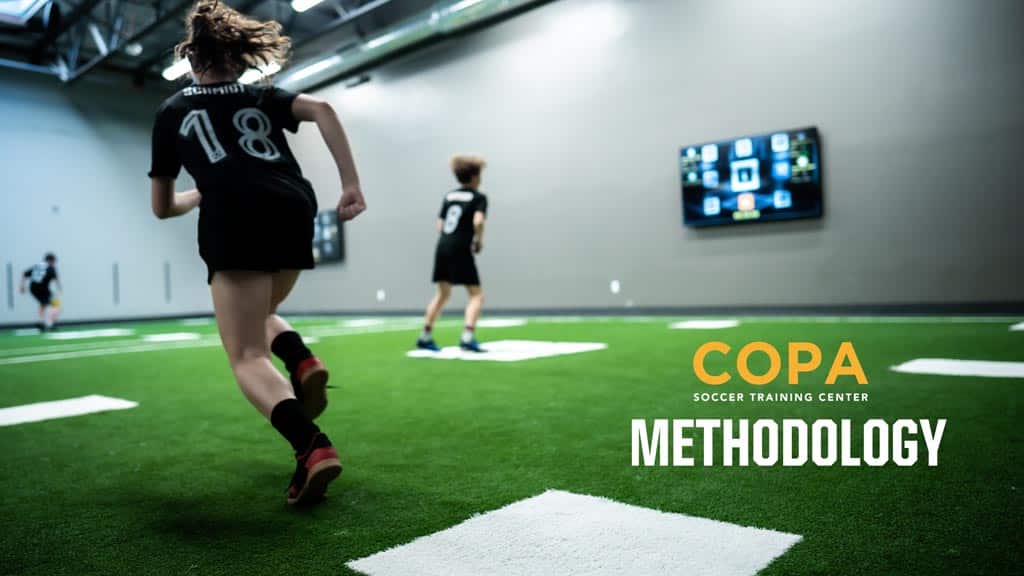


The Next Evolution in Soccer
Goals win games, shape careers, and create legends. Goals also develop the road we travel and navigate us along the journey of who we want to become. They pave the path, provide guidance, and set a destination.
Goals give us reasons to achieve more.
COPA STC’s ultimate goal: Harness the latest advanced technologies to become the global standard in large-scale talent identification and athletic development.
Accomplishing this starts with assessments. Building large-scale databases using player evaluations across ages, genders, and skill levels provide the tools to derive powerful insights into how training regimens affect player development over time. COPA is committing the resources needed to make a long-term investment in the development of data-based knowledge in the growth of player-specific soccer skills.
Assessments are the catalyst behind engaging feedback loops in COPA’s player development and identification ecosystem. After all, COPA does stand for Comprehensive Objective Performance Assessment. These data provide a quantitative benchmark used to measure an athlete’s progress and compare their skills-specific performance to their peers.
Read the Book, Not the Cover
The traditional approach to player development and identification has been heavily influenced by subjective observation. We’ve all heard the cliché “looks can be deceiving,” yet countless athletes have been passed over because of a first look, or they didn’t pass a coach’s eye test. No matter how great they are at observing talent, anyone is subject to fault using incomplete or limited information, even coaches and scouts. COPA aims to fix that.
“COPA’s purpose is to optimize the player development and identification process of clubs, coaches, organizations, players, and parents,” says Charlie Campbell, COPA STC Managing Director. Campbell, an NCAA Division I Coaching Team of the Year member and former professional player, created one of the nation’s largest player identification camp networks. He has teamed up with Mark Hall, a northern California-based diversified entrepreneur, to bring the “Moneyball” philosophy to soccer. Hall’s vision was in pursuit of an objective assessment-based approach that could be scaled to evaluate millions of players globally. “We spent years visiting the world’s top clubs known for talent identification and development using groundbreaking technologies,” said Campbell. This education process led to COPA developing many of its own proprietary training devices and combining them with others to create an orchestra of technologies to evaluate player skills.

Athletes of all ages and skill levels have access to this innovative technology.
COPA STC readily offers their technologies and training methodologies to create vital data that guides a curated curriculum for each athlete’s long-term development. All ages and all skill levels can access the most advanced tools through COPA. They are transforming their approach to player development so anyone with the right drive can unlock their full potential.
Breaking Down The COPA Score
Here is a play-by-play to better understand their assessment-based approach:
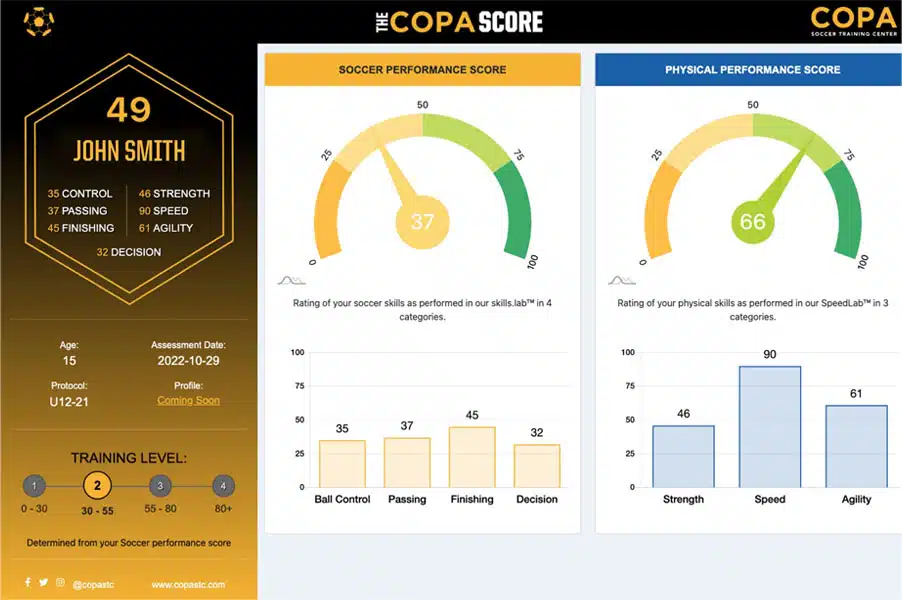
Athletes of all ages and skill levels have access to this innovative technology.
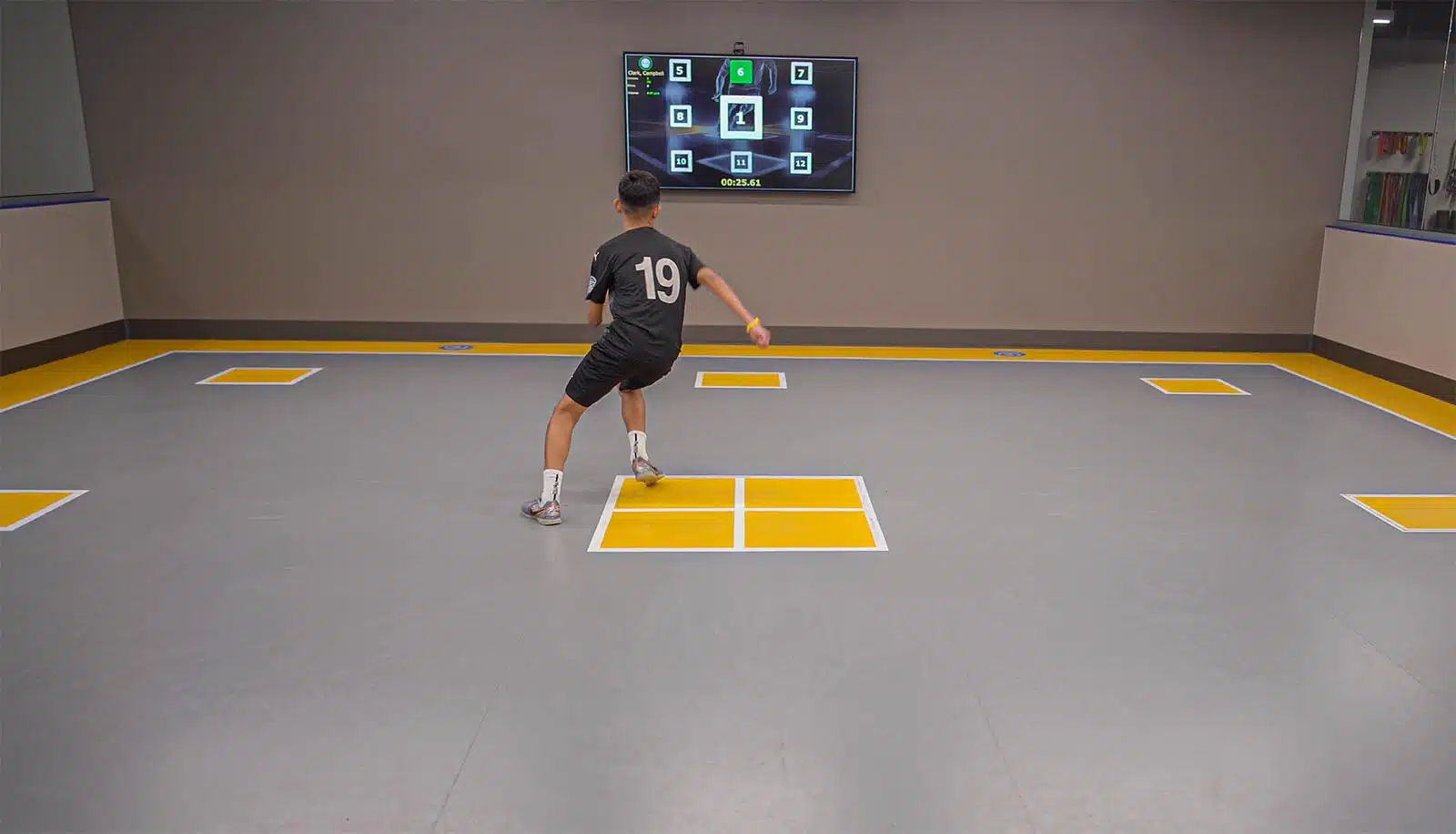
The SpeedCourt is an agility-based training and assessment device that uses customized games to challenge athletes physically and cognitively.
These numbers would be arbitrary if it weren’t for the database COPA has accumulated from thousands of assessments of athletes of all ages and skill levels. They can compare an athlete’s assessment performance against those of a similar age to see how their skillset matches up. They can also compare each player to their aspiring level of play. Where did they excel? What aspects of their game could use improvement? How did they stack up against the high performers?
“These comparative data inform us of the next phase of training,” says Dr. Ming-Chang Tsai, COPA STC Director of Science and Technology. “Once we identify strengths and gaps, we can individualize training sessions and development plans to address these. This is where the data comes into play. Now that we have the athlete’s completed assessment and a database to compare their skills to, we can prescribe training. We individualize the training approach in a small group setting tailored to focus on highlighting each athlete’s strengths and developing their shortcomings.”
The athlete has a goal, COPA provides the guidance and tools to get them there.
And this is not a one-off assessment. It’s repeatable. By assessing, data comparison, training, reassessing, and so on, they provide the opportunity for constant and continued growth.
Everyone Gets a Fair Shot
Almost every athlete knows what it’s like to be looked over and passed up. You put in the work and show up to find hundreds of other hopefuls and one coach with a clipboard at tryouts. Coaches rely mostly on word of mouth, the previous year’s coaches, scouts, or that day’s performance. It’s near impossible for both athletes and coaches to assess everyone in this way. You may perform at your best, but it is easy to fall through the cracks.
Due to the lack of player-specific and peer-based objective data to support decision-making, player identification has often proven to be inefficient and littered with bias – specifically around the prioritization of physical development over long-term potential. Take Antione Griezmann for example. Turned away by club after club due to his small stature only to end up a World Cup champion. How many other Griezmann’s have been overlooked due to bias and short-sightedness?
COPA is one of the few organizations leading this movement. “Eventually, the days of purely subjective observations and player identification will be a relic of the past,” Campbell adds. “Quantitative data will assist decision-makers in their evaluation of talent. Organizations like the Oakland Roots, NorCal Premier PDP Program, Walnut Creek Surf, and multiple NCAA Division 1 programs are already leveraging the COPA Score to assist in player identification.”
By establishing benchmarks, these assessments have become a filtering mechanism to evaluate talent objectively and accurately on a large-scale basis. COPA believes similar organizations will increasingly come to rely on their expertise in this area to essentially outsource initial talent evaluation and compare prospective players to their large-scale database. Players will realize that having a COPA Score will become a needed element for consideration in clubs and collegiate recruiting, as well as simply being a fun and useful way to track growth and compare to friends and peers.
Starting With The Roots
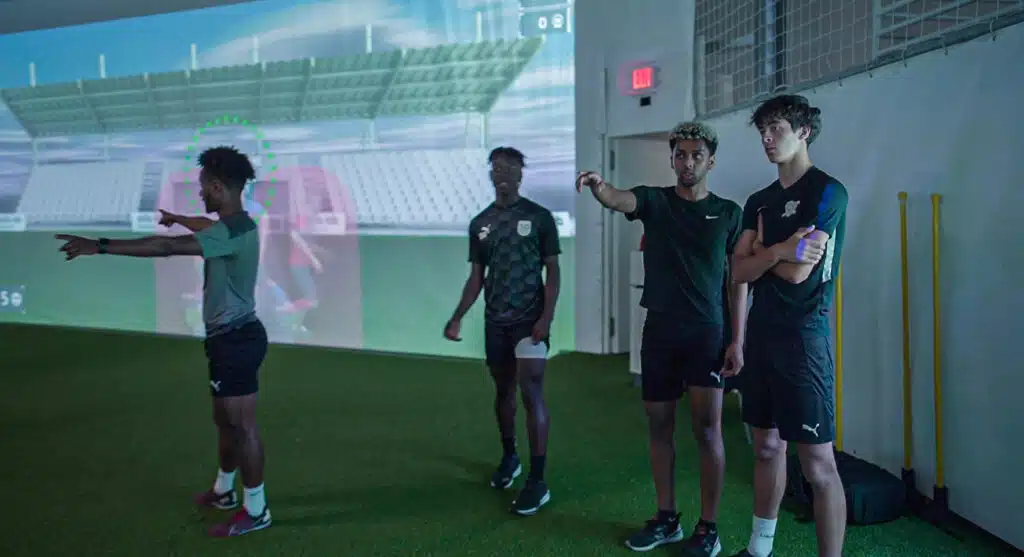
Players from Project 51O prepare for their assessment in the skills.lab Arena.
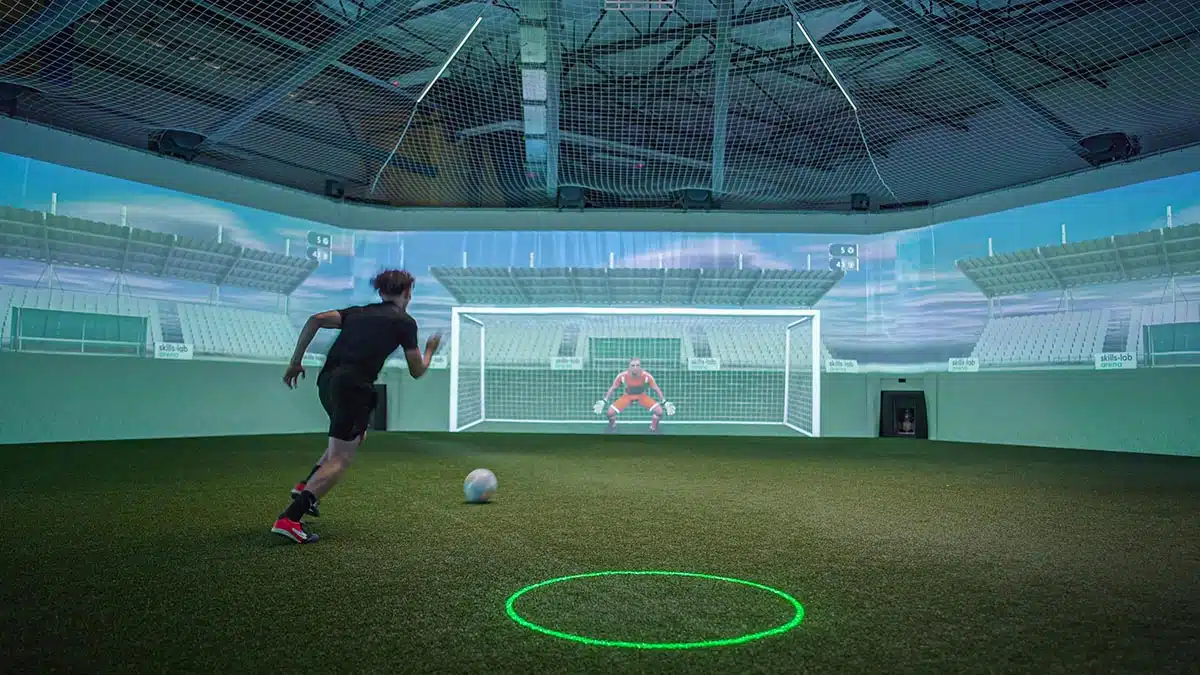
One of the many protocols is a player’s ability to finish with speed, power, and accuracy.
COPA and the Roots are completing the assessments of their current players to establish their competitive benchmarks and assisting their technical staff in making team selections in the coming years. This objective player identification pathway will also be provided to aspiring professional players to see how they stack up against existing Roots professional athletes.
Transformation Process
COPA STC’s goal is to transform soccer’s subjective approach to player identification and continue to pursue player development best practices through actionable information on specific skills and areas for focus. They want to change the game so everyone has a fair shot at their goals.
That leaves one final question – what is your goal?